The shichijō kesa (七条袈裟) is the seven-strip robe, the second of the three robes. It is an important ceremonial kesa in several Japanese Buddhist schools, used for worship, formal services and lectures; the appropriate robe depends on the school, the wearer’s role and the occasion. It is built from two kinds of cloth, the dainaka (the rectangular panels) and the en (the lattice-like border), and the combinations are almost endless. It is rarely replaced, so it is worth choosing carefully.
What is a shichijō kesa?
The shichijō kesa is the seven-strip kesa and one of the three robes (三衣). Its old name is 鬱多羅僧 (uttarasō, Sanskrit uttarāsaṅga), and it has other names such as 中衣 (chūe) and 入衆衣 (nyūshu-e). It is worn by priests above all when listening to lectures and paying homage to the Buddha, and it is often the outermost of the garments. Please confirm your temple’s requirements before ordering.
What are the parts of a shichijō kesa?
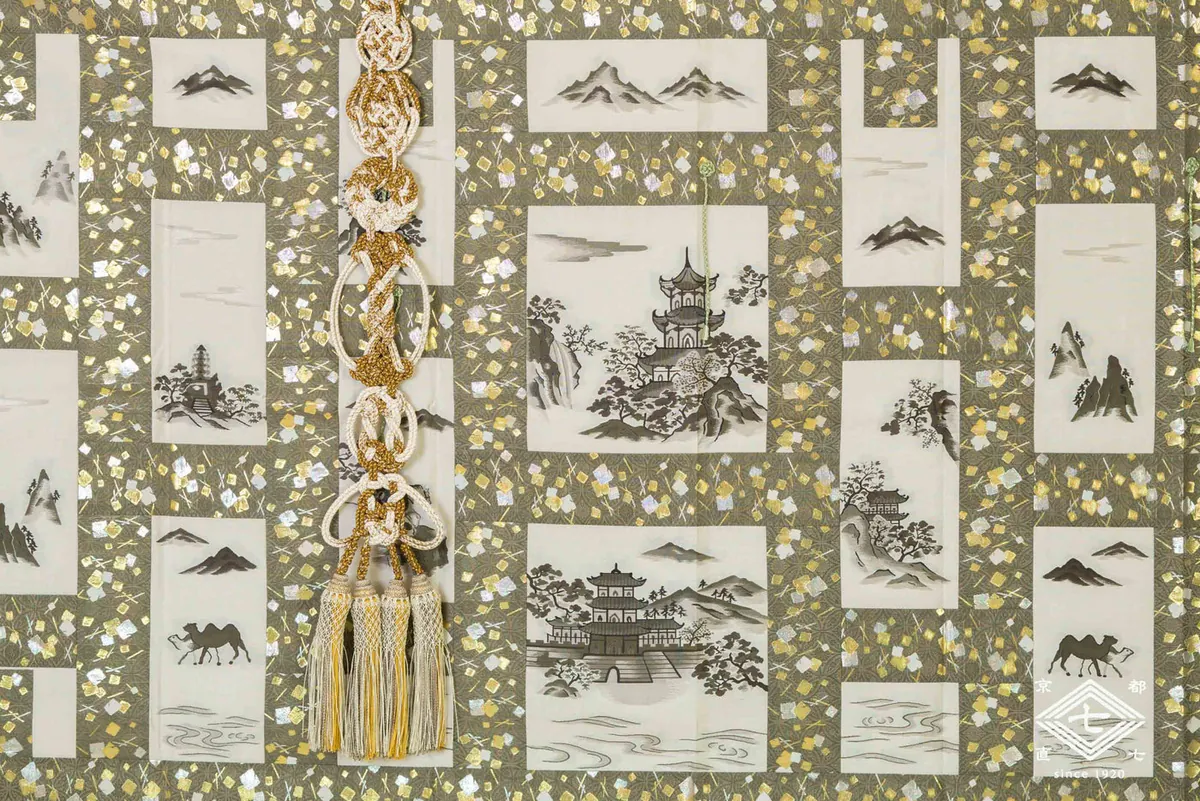
A seven-strip kesa is assembled from two main types of cloth:
- Dainaka (台中): the rectangular fabric panels framed by the en. (The characters are read “dainaka”.)
- En (縁): the border cloth that runs vertically and horizontally between and around the dainaka, like the lines of an amidakuji ladder drawing.
The combinations of dainaka and en run into the hundreds. What you see in a catalogue is just a sample. Fabric, colour, weight, lining and sewing method all change how the robe looks, feels and lasts.
What are the two kinds of shichijō kesa?
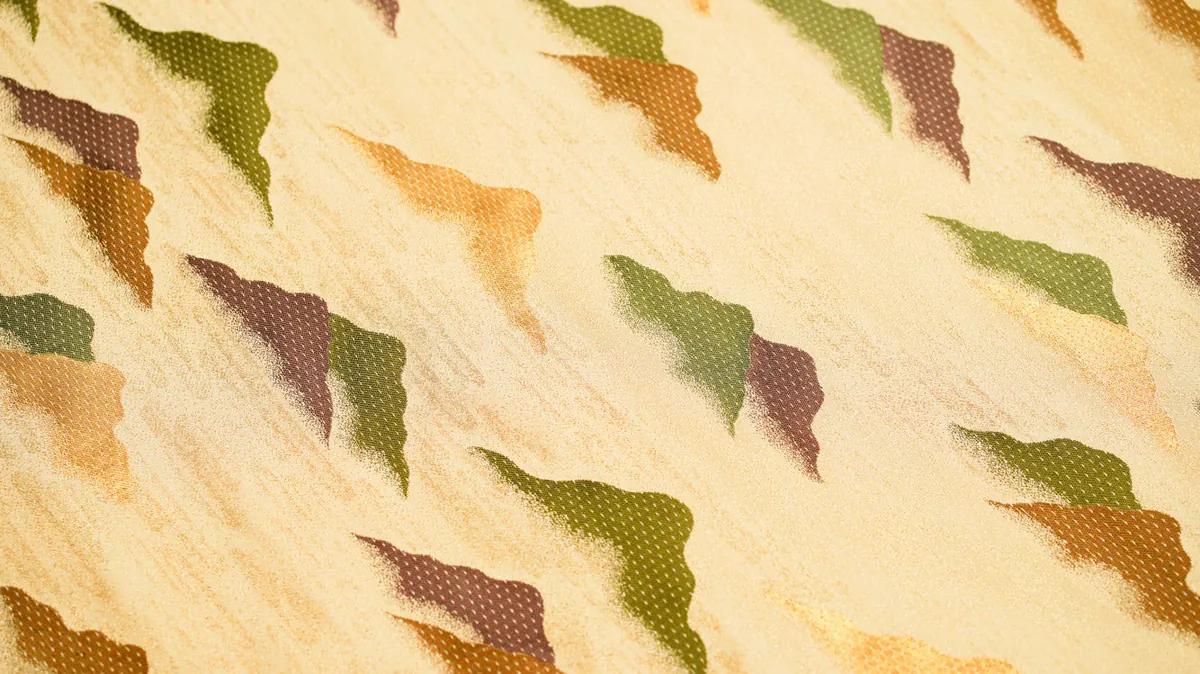
In Jōdo-shū terminology, seven-strip kesa include the muted-colour nyohōe (如法衣), considered close to the robe of the Buddha’s time and more restrained in appearance, and the more ornamental shōgon-e (荘厳衣), which uses rich brocade and, in some cases, gold thread. Names, construction and rules of use vary across Buddhist traditions, and the materials and threads used differ by school.
Ornamented kesa have a long history in Japan, and their materials, designs and ceremonial uses developed differently across schools. As one example, a Tang-dynasty seven-panel robe preserved at Enryakuji, now a National Treasure, is made of hemp cloth decorated with embroidered patches; it has long been said to have been brought from Tang China by Saichō (Japan’s Agency for Cultural Affairs records this as a tradition, not as confirmed fact).
What should I think about before buying one?
A seven-strip kesa is not bought often, and it is not cheap. For many it is a treasured garment, kept and cared for over many years. We suggest you consider:
- Your school and role. Different schools use different colours, patterns and cords. Tell us yours.
- Season and use. Summer, winter and year-round weights are available. A heavy brocade you cannot bear in July may end up unused.
- How often you wear it. A kesa for weekly services needs different fabric and lining than one for annual ceremonies.
- Your region and climate. This matters a great deal overseas.
- Budget. Price alone does not determine comfort or durability. We can explain the fabric, lining and construction of each option; these details matter as much as the face fabric but are hard to judge from a photo.
Our approach is to talk it through, one question at a time, until the kesa suits you. Whether you know exactly what you want or have no idea where to start, you can simply ask us.
What do you offer?
We make seven-strip kesa in several ways: fully custom-made (price on request: we give a quotation after discussing the fabric and specification), a semi-custom set with a choice of four border colours and four dainaka patterns (sixteen combinations), and designs made with Kyoto weavers. Our online store lists current examples; the product pages are in Japanese, so tell us what you are looking for and we will guide you. As a guide, the semi-custom “New Selectable Shichijō Kesa” is ¥650,000 and the summer-weight “Ink-Painting Silk Road” model is ¥880,000 (shop prices in yen as of 25 October 2026; please check the product page). Shipping and import duties are separate; see how to order from outside Japan.
Browse the current range on our shop: Shichijō kesa collection.
Planning a seven-strip kesa?
Send us your school, your height and where you will wear it. We will propose a fabric, colour and price in yen, and tell you the lead time.
Frequently asked questions
What is the difference between a shichijō kesa and a gojō kesa?
A shichijō kesa has seven strips and is a ceremonial robe associated with worship and lectures. A gojō kesa has five strips; in early accounts it is the most basic robe, and today it appears in several forms depending on the school.
How long does a seven-strip kesa take to make?
It depends on the model and on how busy the workshop is; many are made to order. We will advise the estimated production time when we reply. International transit and customs clearance take additional time, so please say early if you have a date to meet.
Can you make a kesa to the specification of my school?
Many items are made to order and can follow the specification of your school or tradition. We have experience with Jōdo Shinshū, Jōdo, Shingon, Tendai and other schools; please tell us yours and your temple’s requirements.
Can a kesa be repaired?
Yes, we clean and repair kesa in Kyoto, including lining replacement. If you are outside Japan, write to us first with photos so that we can tell you what is practical.
Keep reading

Written by Kengo Kawakatsu (“Naoshichi”), fourth-generation owner of Naoshichi Houiten, a Kyoto maker of kesa and Buddhist robes since 1920.