A kesa is traditionally built from rectangular pieces in a paddy-field pattern. The strips, ridges, fields, border and corner patches all have names. Traditional descriptions recognise several construction methods, and kaeshibari is a traditional stitching method. Modern kesa are made from silk brocade or fine synthetics by craftspeople, and the maker’s choices about lining, stitching and fabric weight decide how long the robe lasts.
What are the parts of a kesa?
Because the kesa is likened to rice paddies, its parts have the names of a paddy landscape. From the traditional description (often cited from Kesa Kudoku):
| Part | Japanese | What it is |
|---|---|---|
| Ridge | 葉 yō | The narrow path between fields. |
| Strip | 条 jō | A vertical column of fields. The “five-strip” and “seven-strip” in the name count these. |
| Field | 甲 kō | Each individual rectangle. |
| Border | 縁 en | The narrow cloth running around all four sides. |
| Hook and cord | 鉤紐 kōchū | The cord used to hold the kesa in place. The reinforcing patch where it is attached is the 台座 daiza. |
| Corner patch | 角牒 kakujō | The small squares at the four corners. |
What are the traditional ways of making a kesa?
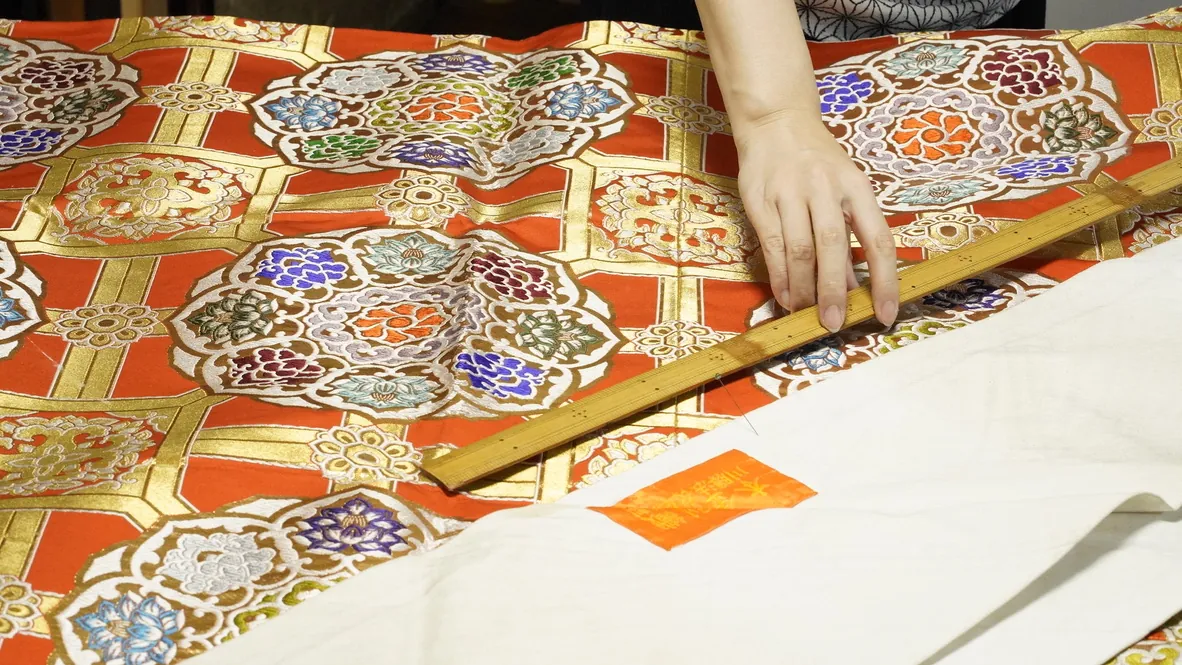
Traditional descriptions include pieced construction, applied strips and folded or pleated construction, and plain unpanelled robes are also described. Terminology and rules of use differ by text and tradition; for example, the Shinsan Jōdoshū Daijiten lists five types (縵衣, 屈摂衣, 割截衣, 揲葉衣 and 糞掃衣). A commonly cited classification (from Kesa Kudoku) is:
- Kassetsu-e (割截衣): cut sections joined by sewing; each field is a separate piece of cloth. In the conventional fifteen-panel pattern, each panel has three long sections and one short section, giving sixty field sections in total.
- Chōyō-e (貼葉衣): separate strips applied to a larger cloth. It is described as a method used when there is not enough cloth for a kassetsu-e, and the ridges and borders may be a different cloth.
- Shōyō-e (摂葉衣): the panel pattern is formed from one wide, uncut cloth, with the ridges made by folding pleats.
- Unpanelled robes (such as the shami-e, 沙弥衣): a plain cloth with no panel pattern, associated in the texts with novices. Whether such a robe may be used depends on the tradition.
What is the kaeshibari stitch?
却刺 (kaeshibari, also read kyakushi) refers to traditional stitching methods used in kesa making, and the appearance and technique vary. In some hand-sewn examples, only small stitches the size of a sesame seed are visible on the front. The Kesa Kudoku records the teaching that the kesa of the Buddhas should be sewn this way, and Jōdo-shū reference works also describe kesa as sewn with kaeshibari (a back-stitch) rather than a straight stitch. Which stitching is used in a particular modern kesa depends on the maker and the item, so please ask us about the item you are considering.
What fabrics are used today?
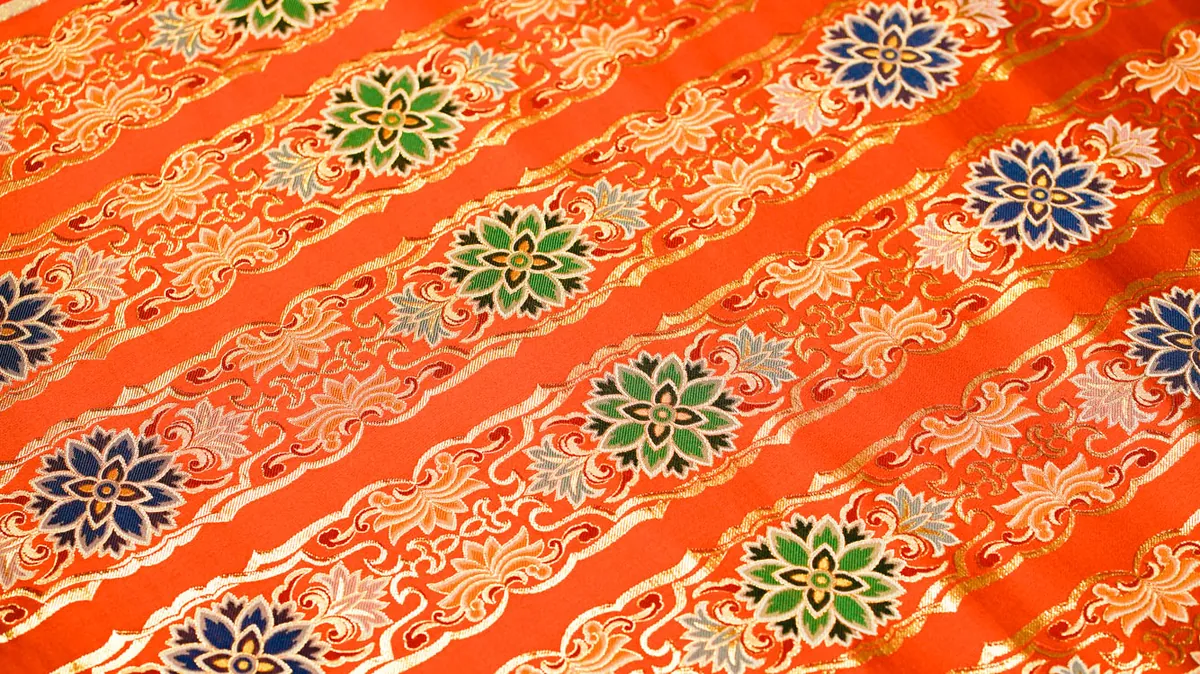
Modern kesa are woven silk (brocade, 金襴 kinran, gauze) or high-grade synthetic fabric. Some use genuine gold thread (本金). Seasonal weights matter: we offer summer, winter and year-round constructions, because a robe worn in a hot, humid country needs a lighter cloth and lining than one worn in a cold temple. The black sumi-gesa used for ordination comes in several silk weaves.
Why Kyoto?
Kyoto has been a centre of Japanese textile weaving, dyeing and sewing for centuries. Naoshichi Houiten has its shop in Shimogyō ward, Kyoto, and makes original designs together with craftspeople. Many items can be adapted to your school, fabric and size; please ask.
Want to know how yours would be made?
Ask us about fabric, lining and construction when you inquire. These details are hard to see in a photograph but decide how long a kesa lasts.
Frequently asked questions
Why is a kesa made from many pieces?
The patchwork pattern goes back to the early kesa sewn from discarded cloth and is now a symbol: the pattern is likened to rice paddies, and the monk is the “field of merit”. Other methods represent the pattern on a larger piece of cloth.
What is a kassetsu-e?
A kesa in which each field is a separate piece of cloth, cut and sewn together. It is one of the traditional ways to make a kesa.
What is the difference between a silk and a synthetic kesa?
Silk is traditional and has a particular feel and sheen. Weight, durability and care requirements depend on the fabric, lining and construction, not only on the fibre. Both silk and synthetic fabrics are used; follow the care instructions for the particular item.
Keep reading

Written by Kengo Kawakatsu (“Naoshichi”), fourth-generation owner of Naoshichi Houiten, a Kyoto maker of kesa and Buddhist robes since 1920.